
|
Mental Health America of North Dakota and the ND Federation of Families for Children’s Mental Health, invites you to participate in the Celebration of Lights Tree of Hope tree lighting ceremony – at West Acres Mall (near the Aquarium), Monday, December 4th starting at 5:00pm. North Dakota State Senator Judy Lee and Senator Kathy Hogan will help light the Tree of Hope in Fargo.
The Tree of Hope serves as a beacon to remind us that the stigma toward mental health still exists and so many remain in darkness because of this. To help erase the stigma and support the need for continued advocacy we are lighting this tree for those who struggle, especially during the holiday season. Your participation supports our work to promote mental health and wellness for children and adults. To support healthier lives and stronger communities, we welcome you to purchase a light or multiple lights on the Tree of Hope. You can also purchase lights as a memorial for someone to honor their memory. Each person you honor will receive a personal card recognizing your gift. This is a wonderful gesture to start off the holiday season in the spirit of sharing and caring. Be a part of a brighter and healthier tomorrow, by joining us for the “Celebration of Lights on December 4th. Mental Health America of North Dakota and the ND Federation of Families for Children’s Mental Health, invite you to participate in the 39th Annual Celebration of Lights Tree of Hope tree lighting ceremony at McCabe United Methodist Church, Thursday, November 30th starting at 5:00pm. The event will start at McCabe United Methodist Church at 1030 North 6th Street, Bismarck. State Senators Dick Dever and Sean Cleary will host the event. The Central Dakota Children’s Choir will be performing a couple of selections to help us celebrate. Refreshments will be served.
Following the Choir and addresses from State Senators Dever and Cleary, we will light the Tree of Hope near the Governor’s Residence (at the corner of North 4th Street and East Boulevard Avenue). The Tree of Hope serves as a beacon to remind us that the stigma toward mental health still exists and so many remain in darkness because of this. To help erase the stigma and support the need for continued advocacy we are lighting this tree for those who struggle, especially during the holiday season. Your participation supports our work to promote mental health and wellness for children and adults. To support healthier lives and stronger communities, we welcome you to purchase a light or multiple lights on the Tree of Hope. You can also purchase lights as a memorial for someone to honor their memory. Each person you honor will receive a personal card recognizing your gift and is a wonderful gesture to start off the holiday season in the spirit of sharing and caring. Be a part of a brighter and healthier tomorrow, by joining us for the “Celebration of Lights” on November 30th . Parking is available at McCabe United Methodist Church, and additional parking is available on the Capitol grounds. 2/8/2024 Wayne Bartz (1959-2023)Mental Health America of North Dakota (MHAND) is shocked and saddened to learn that Wayne Bartz has recently passed away. Wayne Bartz served as the Director of the Myrt Armstrong Recovery Center (MARC) in Fargo, ND before working for N.I.A.M. Brain Injury Services in Fargo, ND. Early in 2023, Wayne had graciously agreed to serve as the Interim Director of the MARC, all the while maintaining his duties at N.I.A.M. Wayne had a tremendously positive impact on the MARC during both of his tenures, and MHAND is deeply saddened by this loss.
MHAND's thoughts and prayers are with Wayne's family and friends during this difficult time. Below is Wayne Bartz's Obituary as published by the Fargo Forum. Dec. 20, 1959 - Oct. 9, 2023 FARGO, N.D. - Wayne Bartz, 63, Fargo, N.D., died Monday, Oct. 9, in his home. Visitation will be from 1-2 p.m., followed by a celebration of life at 2 p.m., Wednesday, Oct. 18, at Grace Lutheran Church in Ada, Minn. Inurnment will be in Lockhart (Minn.) Pleasant View Cemetery. Arrangements by Fredrikson-Ganje Funeral Homes in Ada and Halstad, Minn. Wayne Bartz's Obituary That podcast has now been uploaded to Youtube.
Even though these episodes had been recorded over the last year or two, we think they have held up well. In addition, information gleamed from these episodes are still quite informative about the current strengths and opportunities in the North Dakota mental health system of care. So come check us out on Youtube! Mental Health Advocacy Network Podcast Season 1 on Youtube From June 6-8, the Consumer Family Network (CFN) hosted its first conference since before the COVID-19 Pandemic began, in Dickinson, ND. General sessions included:
Many new members joined the CFN Council. Region 1 (Williston): Terri Cote (Alternate: Sheryl Beard) Region 2 (Minot): Rich Ditmars Region 3 (Devils Lake): Brenda Bergsrud (Acting Representative) Region 4 (Grand Forks): Art Young (Alternate: Gerardo Velasquez) Region 5 (Fargo): Brianna Schrader (Alternate: Cindy Kile) Region 6 (Jamestown): Jamie Walls (Alternate: Tina Martz) Region 7 (Bismarck): Chaz Brobst (Alternate: Jason Kunz) Region 8 (Dickinson): Chris Lambertsen Rural Representative: Darin Olson (Alternate Jayden Eggleston) Mental Health America of ND: Mary Otteson ND Protection & Advocacy Project: Denise Harvey NAMI (National Alliance on Mental Illness): Elyse Olson NDFFCMH: Carlotta McCleary (Acting Representative) 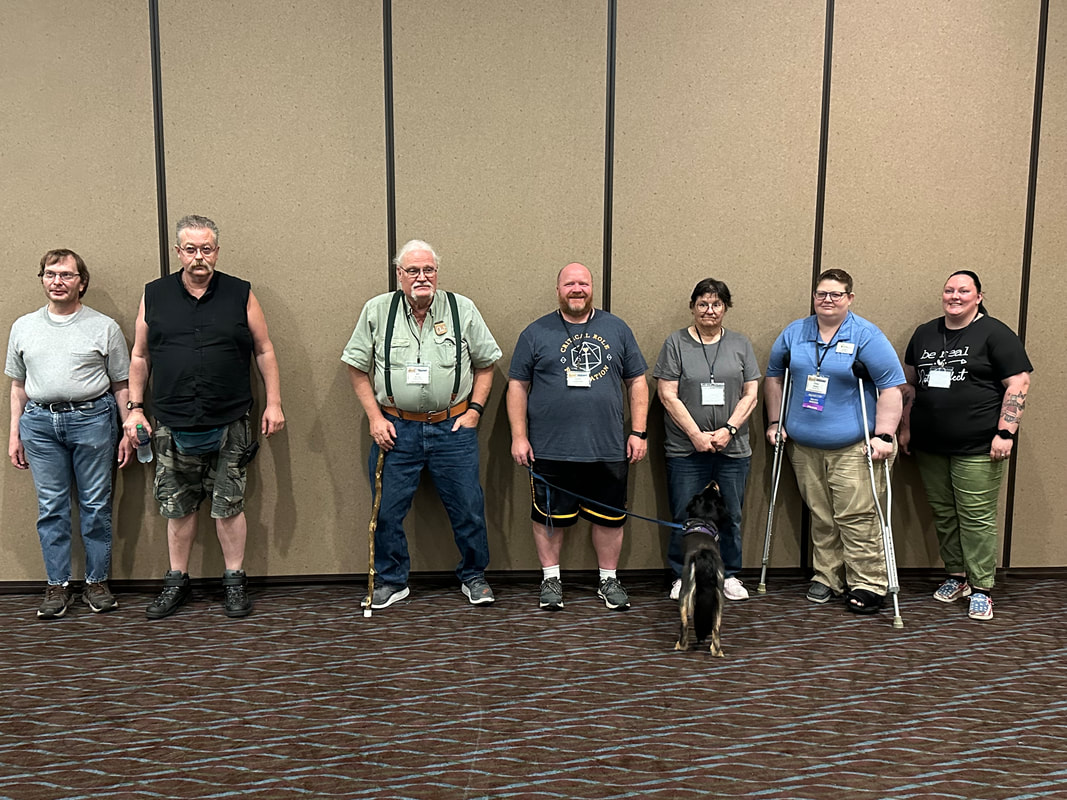 Several Members of the Newly Elected CFN Council Were Present at the CFN Conference in Dickinson (June 2023) |
ArchivesCategories |
 RSS Feed


2/8/2024
0 Comments